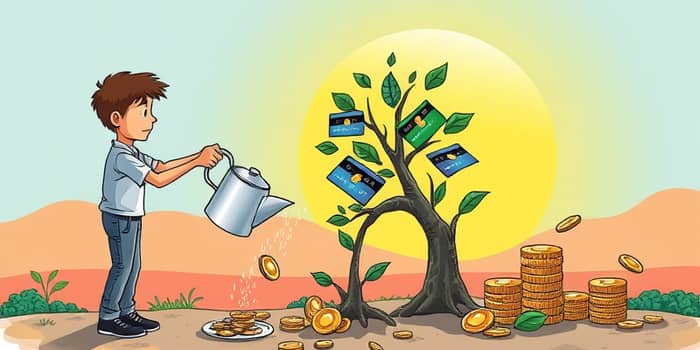
In a world driven by instant gratification, mastering the art of patience can be a game-changer for your finances. Credit cards, often seen as tools for impulsive spending, can instead become a pathway to lasting wealth when handled with discipline and foresight.
By adopting a long-term perspective and applying key strategies consistently, you can transform everyday purchases into powerful levers for building credit, maximizing rewards, and securing financial stability.
The journey begins with building a strong credit history that serves as a cornerstone for future opportunities. Creditors and employers alike view your credit report as a measure of responsibility and trustworthiness. The longer your accounts remain open and in good standing, the more your score benefits.
Start by paying balances in full each month. This not only avoids unnecessary interest charges but also demonstrates consistent financial responsibility over time. Automate payments to ensure you never miss a due date, eliminating late fees and negative marks on your credit profile.
Maintaining a low credit utilization ratio—ideally under 30%—is equally vital. If you have a $5,000 limit, keep your balance below $1,500. This approach shows lenders you can manage available credit judiciously, reinforcing your reliability.
Choosing the right combination of cards can dramatically amplify your rewards without adding complexity. Consider one of these proven strategies:
Once your cards are selected, target category-based optimization. Use your grocery card for supermarket purchases, your travel card for airline tickets, and so forth. This precision spending on high-return categories can boost your effective cashback or points to 5–6% in select areas.
Welcome bonuses often represent the fastest way to accumulate significant rewards. For example, the American Express Blue Business Cash™ Card can generate up to $870 cash back after meeting a $6,000 spending requirement—a 14.5% return on necessary expenses.
To harness this opportunity:
This approach ensures you hit the bonus without falling into the trap of impulse-driven debt accumulation.
Rewards should never drive your consumption. Treat credit card purchases as a reflection of your existing budget, not an excuse to splurge. Set a monthly limit that aligns with your income and financial goals.
Remember that the minimum payment exists to keep you in debt longer. By paying only the minimum, you allow compounding interest growth to erode your balance over time. Instead, aim to pay down as much principal as possible each cycle.
Monitor your statements regularly to identify any unexpected charges or categories where you may be overspending. If paying in full becomes challenging, reassess your budget and reallocate funds from non-essential areas to maintain your credit health.
Accumulating points and cash back is only half the battle. To truly unlock value, focus on strategic redemption:
Use points during peak travel seasons or for high-end hotel stays when the per-point value soars. Some programs offer bonus redemption days when your points are worth more than usual—plan for these events to stretch each point further.
Don’t let your rewards expire. Keep track of expiration dates and redemption deadlines to avoid losing hard-earned points. By converting rewards into deposits for savings or retirement accounts, you can channel your credit card benefits directly into long-term goals.
Beyond the numbers, adopting a patient mindset fosters resilience. Understanding that each dollar saved, every point accrued, and every on-time payment contributes to a larger goal can transform your relationship with money.
This sustained patience reduces stress, as you know an emergency safety net exists. It also cultivates self-confidence and a sense of control, empowering you to make wiser long-term decisions in other areas of life.
Patience is not passive. It requires active planning, disciplined execution, and continuous adjustment. Yet, when applied to credit card management, it yields significant financial rewards over the long haul.
By focusing on consistent payment habits, strategic card selection, mindful spending, and high-value redemption, you can convert ordinary transactions into catalysts for wealth. Over years—not months—this composed strategy becomes a powerful engine driving you toward financial freedom and stability.
Embrace the power of patience today, and watch how small, deliberate actions compound into extraordinary results.
References