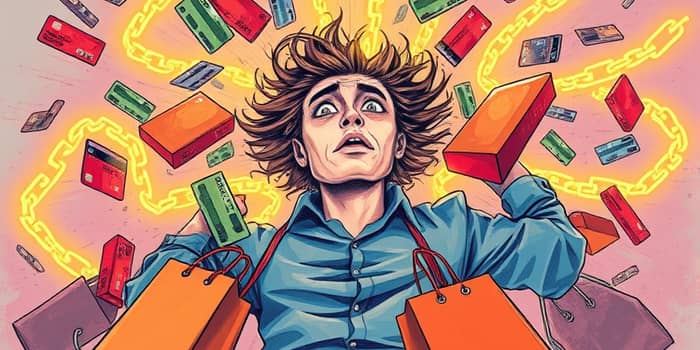
Every swipe of a credit card carries the promise of instant gratification without immediate cash leaving your wallet. But what starts as a quick thrill can turn into a debt spiral. In 2025, U.S. credit card balances reached $1.233 trillion, with Gen Z averaging 84 impulse purchases per year—double the general population’s rate. Welcome to the “impulse buy trap,” where mounting balances and high interest rates threaten financial stability.
Understanding the mechanics of this trap and adopting smart strategies can restore control and pave the way to debt freedom.
Behavioral economics research, including classic work by Prelec & Simester, shows that the pain of paying reduced with plastic cards encourages unplanned spending. The mental distance created by swiping or tapping mimics “free money,” driving purchases on retail goods, clothing, and electronics.
Gen Z is especially susceptible. Digital shopping platforms, one-click payments, and personalized offers amplify the desire for immediate rewards. Even when overall sentiment is sour, a phenomenon called “treat math” disconnects mood from spending habits, making impulse buys feel justified.
Credit card debt has climbed to new heights amid elevated interest rates and economic challenges. The average U.S. cardholder now carries $6,730 in debt, up 3.5% year-over-year in 2024. Meanwhile, the average credit limit rose to $29,855 as of Q3 2023, granting ample room for unplanned expenditures.
Delinquency rates appear stable—3.6% in Q4 2024—but deeper trends reveal strain. Sixty-one percent of debtors hold balances for over one year, and 22% make only minimum payments, accruing interest that compounds rapidly.
Inflation near 2.45% and stagnant wages have driven an 18% rise in middle-income reliance on credit for essentials. Medical emergencies alone account for 25% of new debt balances. As lower-income households struggle (+0.4% YoY card spend) while higher-income groups thrive (+2.4%), a K-shaped recovery deepens the divide.
Buy Now, Pay Later (BNPL) services have surged from $316 billion in 2023 to a projected $442.6 billion by 2027. Though attractive for short-term cash flow, BNPL can funnel users back into high-interest revolving credit if payments are missed.
Gen Z’s impulsivity is mirrored by high digital engagement. Approximately 1 in 20 make daily impulse purchases, often smaller transactions that accumulate unseen. Older generations carry lower impulse rates but still face the trap when limits exceed $30,000 on average.
Businesses are not immune. Small enterprises use credit extensively: 83% maintain business cards, averaging $13,000 in monthly spending. Without disciplined repayment, company debts echo personal traps, risking cash flow and creditworthiness.
Converting insight into action is vital. The following tactics can help you break free from revolving debt and build resilience.
The credit card landscape can feel like a minefield of impulse traps and high rates, but knowledge and discipline offer escape routes. With over $1.18 trillion in projected balances by end-2026, the stakes have never been higher.
By understanding the mental distancing effects of cards, analyzing debt data, adapting to economic realities, and applying proven strategies, you can transform your relationship with credit. Financial freedom isn’t a distant dream—it begins with each mindful decision today.
References