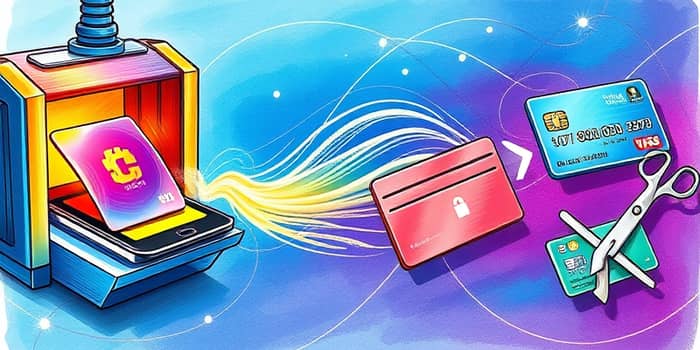
Credit cards are more than mere payment tools. Behind each swipe or tap lies a complex, well-coordinated series of steps ensuring security, compliance, and convenience.
The lifecycle begins with an application. Banks use rigorous identity checks and analytics to confirm your identity and assess creditworthiness. This often includes a credit bureau inquiry and fraud risk evaluation powered by machine learning.
Once approved, personalization kicks in. Your name, account number, chip data, and magnetic stripe information are encoded. High-security printing centers then embed encryption keys directly into the chip before packaging.
Evolving trends now let customers complete applications entirely online. Advanced scoring models leverage alternative data, such as utility payments, making credit more inclusive. Every card also undergoes multiple security verifications at printing centers to guarantee chip integrity.
After delivery, activation links the new card to your account. Issuers provide clear instructions via phone, mobile app, or website. This step confirms ownership and arms the card with initial security credentials.
Beyond traditional activation, many issuers encourage adding the card to digital wallets. Through tokenization, your card number is replaced by a device-specific token, creating an extra layer of transaction security for mobile and contactless payments.
With activation complete, everyday transactions begin. Each purchase triggers a hidden sub-cycle, remaining invisible yet crucial for smooth operations. Simultaneously, issuers deploy real-time fraud monitoring and alerts to identify suspicious patterns.
Every billing cycle, typically spanning 28 to 31 days, aggregates your activity into a statement. You then have a grace period—usually 21 to 30 days—to clear the balance and avoid interest charges.
Smart cardholders use spending insights to optimize reward categories and manage credit utilization ratios under 30% to maintain or boost their credit score. Issuers often provide personalized dashboards displaying trends and alerts.
As expiration approaches, issuers proactively dispatch replacement cards with updated security features and extended validity. Notifications typically arrive one month before the old card expires, ensuring uninterrupted access.
For lost or stolen cards, rapid replacement protocols deactivate the compromised card immediately. New numbers, chips, and PINs are issued to limit downtime and protect against unauthorized use.
Before the new card arrives, review any subscriptions or autopay services linked to the old card. Promptly updating merchant on-file information prevents service interruptions and potential fees. You might also seize renewal as an opportunity to upgrade to premium benefits.
Credit cards typically expire after three to five years to mitigate wear, outdated chip standards, and security vulnerabilities. Once the expiry date passes, the old card is rendered unusable.
Issuers remove expired cards from active systems and ensure final balance settlement. Account holders can choose to close accounts or transition to alternative card products based on evolving needs.
When disposing of an expired card, cut through both the chip and magnetic stripe to disable it completely. If local recycling programs accept PVC, consider eco-friendly disposal methods to reduce environmental impact.
Security underpins every lifecycle stage. From KYC checks during issuance to tokenization in digital wallets, layers of protection guard against threats. Industry standards like PCI DSS enforce strict data handling protocols.
3-D Secure protocols, such as Verified by Visa or Mastercard Identity Check, add an authentication step for online transactions, reducing unauthorized use. Contactless payments benefit from dynamic cryptograms that change with each tap.
To further protect yourself, regularly review statements, set custom spend alerts, and report any unusual activity immediately. Combining issuer defenses with proactive monitoring ensures maximum security.
The hidden lifecycle of your credit card—from issuance and activation through daily transaction processing to eventual expiration—reveals a world of technology, compliance, and customer care. Each stage plays a vital role in delivering secure, seamless payments.
By understanding this journey and adopting recommended practices, you empower yourself to use credit cards confidently. Next time you tap, swipe, or click to pay, remember the complex dance behind the scenes keeping your finances both fluid and protected.
References