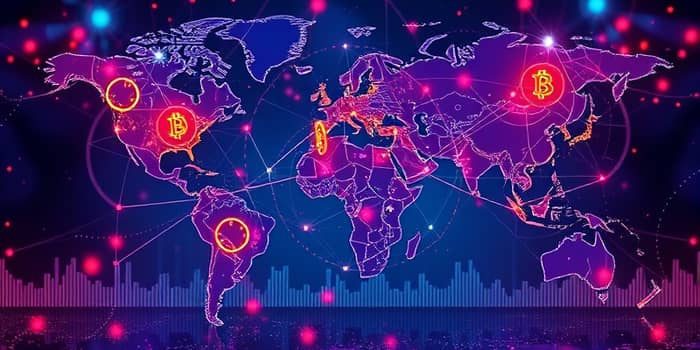
In 2026, a shifting tapestry of geopolitics and technology is rewriting the rules of global finance. As great-power competition intensifies, digital assets have emerged from niche innovation to a frontline of economic strategy and national security. Understanding this new paradigm is critical for policymakers, investors, and entrepreneurs aiming to thrive in an era where blockchains meet battlegrounds and market infrastructure intersects with military strategy.
The world is no longer bound by clear alliances or predictable partnerships. Between lingering conflicts in Ukraine, rising tensions in Asia, and flashpoints across the Middle East, a rapidly fragmenting global order creates both risk and opportunity. As traditional markets close at dusk, crypto exchanges operate around the clock, becoming the first response to geopolitical shocks.
National security agendas now extend beyond borders and battlefields to the digital sphere. Governments prioritize:
Amid this restructuring, digital asset strategies—from sovereign reserves of bitcoin to on-chain debt—are fast becoming tools of statecraft rather than mere investment vehicles.
Clarity in digital asset rules is the single most powerful driver of adoption. In 2026, Singapore and the UAE lead the pack, while Europe’s Markets in Crypto Assets (MICA) and US stablecoin regulations reveal divergent philosophies. The EU seeks to safeguard the euro and monetary sovereignty, while the US focuses narrowly on stablecoins and market structure. These contrasting approaches will shape where innovators and capital flow in the coming decade.
While the Genius Act and executive orders in the US aim to position America as the "bitcoin superpower of the world," European regulators emphasize financial stability and consumer protection. For global players, aligning with emerging regulatory frameworks is essential to avoid costly retrofits and to seize first-mover advantage.
What began as pilot projects in tokenizing real estate or art collections has matured into enterprise-grade deployment of blockchain infrastructure. Entire classes of assets—funds, bonds, carbon credits, even sovereign debt—are moving on-chain. The UK’s DIGIT pilot for fully on-chain government bonds signals a new era where public sector issuances harness distributed ledgers for transparency and efficiency.
Institutional giants like BlackRock forecast that tokenization will expand investable assets beyond traditional stocks and bonds. This trend reshapes liquidity, enabling fractional ownership and 24/7 marketplaces. Corporations are embedding blockchain into accounting, compliance, and cross-border settlement, viewing it not as a fringe technology but as core balance-sheet infrastructure.
Digital assets have proven to be both refuge and risk in geopolitical crises. During the 2026 Operation Epic Fury, bitcoin and ethereum faced immediate sell-offs as institutional desks covered margin calls and reallocated to gold. Yet the round-the-clock operation of crypto exchanges allowed traders to price in a defined war premium more quickly than traditional markets.
Historical patterns from 2022–2026 reveal that trade shocks—such as the 2025 Liberation Day tariffs—trigger deeper and longer-lasting drawdowns than kinetic warfare. But recovery times have shortened as regulated ETFs and custodial services attract institutional inflows. For investors, monitoring correlation shifts between bitcoin, gold, and equities is a practical way to gauge market sentiment during global tensions.
In this volatile environment, success belongs to those who blend agility with foresight. Key strategies include:
For businesses, embedding blockchain into core operations—such as supply chain tracking, digital identity, and cross-border settlement—not only unlocks efficiency but also positions them at the forefront of digital sovereignty debates. Startups and incumbents alike should seek partnerships with regulated custodians and explore tokenization pilots with governments and financial institutions.
The geostrategic pivot toward digital assets is more than a trend; it represents a foundational shift in how power, capital, and technology converge. By understanding emerging regulations, harnessing tokenization, and preparing for market responses to crises, stakeholders can turn uncertainty into opportunity. This new world order rewards adaptability, foresight, and collaboration across borders and sectors.
References