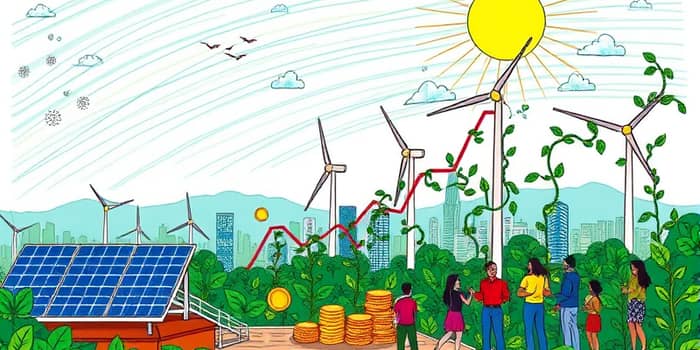
Green financing represents a paradigm shift in how we allocate capital, emphasizing environmental care and social prosperity. By prioritizing projects that yield positive environmental and social impacts, it seeks to transform traditional finance into a tool for planetary stewardship. This movement is vital as we race to reduce emissions, protect biodiversity, and build resilient communities around the globe.
Unlike conventional funding models that focus solely on profit, green financing demands greater transparency on long-term performance and integrates environmental metrics into financial decisions. This comprehensive approach not only supports the health of our ecosystems but also opens new avenues for innovation, job creation, and sustainable development.
At its core, green financing channels investments toward initiatives that address climate change and environmental degradation. It spans a broad spectrum of instruments—loans, bonds, insurance products, and equity funds—all designed to encourage low-carbon growth.
Its key objectives include:
Green financing instruments are diverse, each tailored to specific needs and risk profiles. Financial institutions, governments, and private investors collaborate to design products that balance returns with environmental benefits.
Below is a table summarizing some of the most widely used green finance tools:
Each instrument carries unique considerations. Green bonds often appeal to institutional investors seeking stable yields, while green funds may attract those willing to accept more volatility for higher impact. By understanding risk profiles and environmental outcomes, stakeholders can tailor their strategies for maximum effect.
Green financing delivers far-reaching advantages that extend beyond financial returns. By aligning investments with ecological wellbeing, it fosters a harmonious relationship between economic activities and the natural world.
Communities benefit directly as access to green loans and insurance increases resilience against climate shocks, ensuring that homes and farms withstand floods, droughts, and storms. Moreover, innovative financial structures can unlock new opportunities for startups developing clean technologies.
Despite its promise, green financing faces several hurdles. Data gaps on long-term environmental performance can deter investment, and regulatory frameworks may lag behind market innovation. Additionally, upfront costs for sustainable projects can seem prohibitive without appropriate incentives.
To address these challenges, stakeholders can:
- Develop standardized reporting guidelines to improve comparability and trust.
- Introduce tax incentives, subsidies, and guarantees that reduce perceived risks.
- Foster public-private partnerships to pool resources and share expertise.
By implementing these measures, policymakers and financial institutions can create a more supportive ecosystem for sustainable investments, unlocking new capital flows into climate solutions.
Individuals and businesses play a critical role in scaling green financing. Everyone has the power to direct capital toward sustainable ventures, whether through personal investing, corporate strategy, or policy advocacy.
Small steps, taken collectively, can drive significant change. By demanding transparency and accountability, consumers and organizations signal to markets that sustainability is a priority.
The green finance landscape is evolving rapidly, fueled by technological advances and growing regulatory momentum. Artificial intelligence and blockchain are set to revolutionize impact tracking, while blended finance models will bridge public and private funding.
Emerging economies represent a frontier for growth, where emerging market opportunities for climate finance can uplift communities and protect biodiversity. Sovereign green bonds, green neobanks targeting younger generations, and ESG-linked derivatives are among the innovations defining the next wave of sustainable finance.
As we look toward 2025 and beyond, collaboration across sectors will be essential. By integrating climate considerations into every financial decision, we pave the way for a resilient, prosperous, and equitable future.
Green financing is not just a trend; it is a vital instrument for safeguarding our planet. By embedding sustainability into the core of financial systems, we can ensure that economic growth and environmental health march forward hand in hand.
Now is the time to invest in our shared future. Whether you are an investor, a business leader, or a concerned citizen, your choices matter. Together, we can turn the tide on climate change and build a world where people and nature thrive in harmony.
References