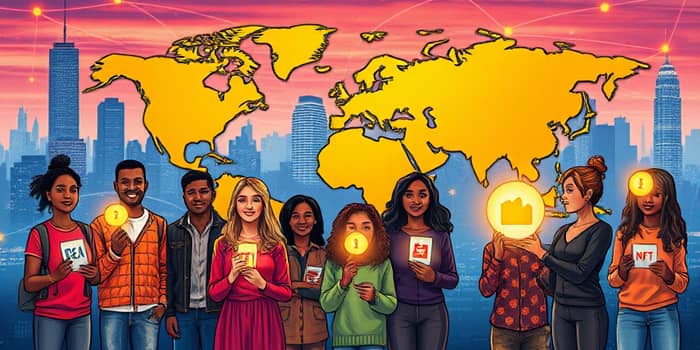
Across the investment landscape, a powerful shift is underway. Fractional ownership is lower barriers to traditional investing and inviting a diverse global audience to participate in assets once out of reach. This model splits ownership, costs, and rewards, offering every investor a chance to own a piece of something great.
At its core, fractional ownership allows multiple individuals to hold a share of an asset without buying the whole. Each investor owns tokens or shares representing a portion of the underlying property, artwork, or digital asset. This structure distributes benefits and obligations proportionally, creating a more accessible route to wealth-building.
By shared economic rights to valuable assets, investors can align their goals with real-world outcomes. The model preserves the fundamental integrity of asset ownership while diversifying investment portfolios with ease, opening doors to properties and collectibles that were previously reserved for the ultra-wealthy.
The engine behind fractional ownership is an interplay of decentralized technologies. Blockchain ensures secure, immutable records. Smart contracts automate transactions and governance rules. Tokenization converts tangible and intangible assets into digital tokens, representing value fractions on distributed ledgers.
Fractional ownership applies to a rich variety of asset categories, amplifying opportunity and choice. Real estate, fine art, and NFTs are just the beginning. Even private equity can become accessible to everyday investors, redefining who can buy and sell in these markets.
Investing in fractional assets delivers a range of benefits that traditional ownership struggles to match. With inclusive access for all economic backgrounds, anyone can participate with minimal funds, often starting at amounts as low as fifty dollars. This transparent record-keeping on the blockchain reduces fraud and increases trust.
Diversification becomes effortless when each investor can spread small allocations across dozens of properties or artworks. Meanwhile, professional management firms often handle maintenance, rentals, and legal compliance, offering professional management without day-to-day burdens. Investors earn proportional income without the operational headaches of sole ownership.
Liquid secondary markets allow shares to trade in days or weeks, a stark contrast to months needed for selling a whole property. This automated operations with unparalleled transparency breeds confidence and agility, empowering investors to adjust positions rapidly as markets change.
No innovation comes without trade-offs. Fractional ownership investors often cede some control, as major decisions require consensus or delegate to managers. This limited autonomy can be frustrating for those used to making unilateral property choices.
Potential conflicts may arise when investor groups disagree on renovation plans, exit timing, or income distribution strategies. Moreover, while liquidity is improved versus traditional holdings, secondary market depth can vary by platform and asset type. Investors should research platforms thoroughly and weigh fees tied to professional management.
As regulatory frameworks evolve and platforms mature, fractional ownership is expanding market participation globally. Real estate tokenization, once niche, now attracts institutional interest. Crowdfunding pioneers have set the stage, and blockchain delivers the reliability needed for large-scale adoption.
By inclusive access for all economic backgrounds, the emerging asset class grows organically, fueling demand for diverse offerings. This expansion fosters novel investment vehicles, blends traditional finance with DeFi, and propels a new era of digital economies.
NFTs, initially plagued by illiquidity and volatility, find stability through fractionalization. Co-owners share in an artwork's cultural and financial value, unlocking new revenue streams and community governance models. Permissioned token protocols ensure compliance for high-value assets.
Meanwhile, real-world assets (RWA) such as real estate, commodities, and private company shares increasingly migrate on-chain. This trend merges the tangibility of physical assets with the agility of digital finance, promising ownership redefined in the digital age and empower individuals regardless of background.
Fractional ownership stands as a testament to human ingenuity and the power of decentralization to drive equity. From city apartments to museum-worthy paintings, investors from varied backgrounds can claim their stake, rewriting narratives around wealth creation and community participation.
As you explore these platforms, consider how fractional ownership aligns with your goals. Whether seeking diversified income, cultural engagement, or portfolio growth, this model offers a pathway to assets you once believed unreachable. Dare to dream big and seize vibrant future for digital economies, one fraction at a time.
References