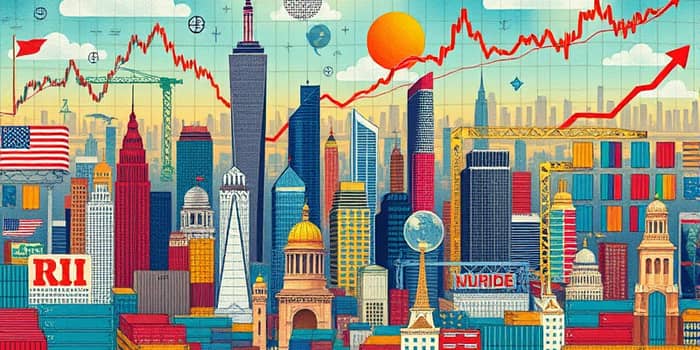
Emerging markets stand at the crossroads of ambition and uncertainty. As economies shift from developing to dynamic growth phases, they offer investors and businesses both promise and peril.
In this article, we explore how to harness opportunity, mitigate challenges, and prepare for a future shaped by rapid change.
Emerging markets are defined by their accelerating industrialization and integration into the global economy. They differ from developed markets through a blend of youthful demographics, maturing infrastructure, and evolving financial systems.
While no single definition exists, most share common traits that drive both growth and volatility.
Emerging markets present a fertile ground for high returns thanks to rapid modernization and global trade. Investors and businesses that position themselves strategically can reap significant benefits.
High growth comes with elevated risks. Geopolitical tensions and policy shifts can trigger sudden market swings, while currency fluctuations erode returns.
Inflationary pressures, environmental challenges, and inequality must be managed to avoid long-term instability.
Understanding the trade-offs between stability and potential is essential when building a diversified portfolio or business strategy.
To thrive amid both promise and peril, stakeholders must adopt adaptive, long-term approaches. Here are practical steps for navigating emerging markets:
1. Diversify exposure across countries and sectors to balance growth drives against local risks.
2. Forge local partnerships that bring cultural insight and operational agility.
3. Prioritize environmental and social governance to ensure inclusive, resilient development.
4. Leverage technology for real-time data on market shifts, currency movements, and consumer trends.
According to recent projections, emerging markets are poised to maintain a steady 4% average GDP growth in 2026, driven by Asia’s electronics exports and infrastructure investment in Latin America.
Inflation is expected to moderate at around 3–5%, while central banks may ease policies to sustain recovery. However, tariff risks and geopolitical tensions remain wildcards.
Whether you are an institutional investor, a multinational corporation, or a local entrepreneur, these insights can guide your decisions:
The journey through emerging markets requires both vision and vigilance. By blending optimism with rigorous risk management, you can unlock remarkable opportunities while safeguarding your investments.
As these economies evolve, those who stay informed, flexible, and socially responsible will lead the next era of global growth.
References