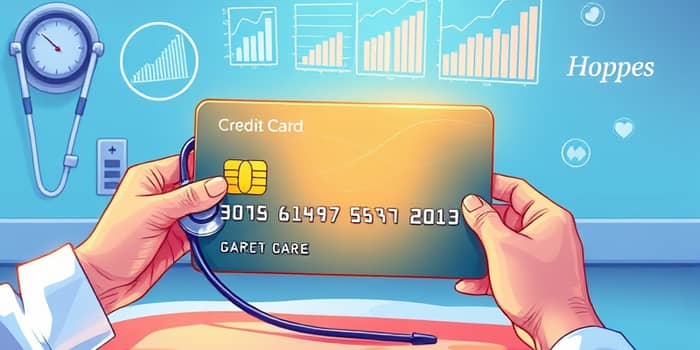
Nurturing your financial well-being demands careful attention to every aspect of credit behavior. Just as you schedule routine medical appointments to monitor your physical health, conducting consistent financial health check-ups can safeguard your credit profile and fortify your fiscal future.
Your credit report serves as a detailed record of your borrowing and repayment habits. Maintained by major bureaus – Experian, Equifax, and TransUnion – these reports outline your credit score, outstanding balances, and critical credit utilization ratio measures. You're entitled to one free report from each bureau annually via AnnualCreditReport.com.
When reviewing reports, watch for unfamiliar accounts, incorrect balances, or outdated personal details. Even minor errors can trigger score declines and limit your eligibility for loans or favorable interest rates.
To maintain year-round oversight, stagger your free annual reports by rotating bureaus every four months. This approach offers a rolling view of your credit profile and prevents surprises. If you spot discrepancies, file a dispute immediately with the relevant bureau, providing supporting documentation to expedite resolution.
Proactive monitoring reveals early warning signs of potential credit issues before they escalate. A critical aspect is analyzing your payment history and trends to spot irregularities or missed deadlines.
In addition to digital tools, make a habit of monthly statement reviews. Look for unauthorized charges, duplicate transactions, and billing errors. Checking recurring subscriptions prevents unwanted expenses from silently draining your balance.
Alongside digital services, consider maintaining a simple spreadsheet or journal of your card balances, due dates, and payments. This low-tech solution complements automated alerts and offers a tangible view of your financial habits, reinforcing accountability.
Establishing consistent payment routines is the cornerstone of credit wellness. Late payments can drastically impair your score and incur hefty fees. Prioritize on-time payments through automation, ensuring at least the minimum due is covered each month.
Beyond the minimum, aim to reduce outstanding balances more quickly by applying surplus income—such as tax refunds or bonuses—toward debt. This approach trims interest costs and accelerates your journey to financial freedom.
Understanding the impact of payment history and patterns on your credit score empowers you to make informed choices. Consistently paying in full each month, when feasible, exemplifies responsible borrowing and elevates your overall creditworthiness.
Choosing an effective debt reduction plan is vital. Two popular methodologies—the snowball and avalanche methods—offer structured paths to eliminate credit card balances. Use the comparison below to select a strategy aligned with your goals.
Alternatively, consider balance transfers or personal loans for consolidation. These options may introduce lower interest rates, converting revolving debt into manageable installments. Be mindful of transfer fees and introductory rate durations.
While the snowball method fuels motivation with early successes, the avalanche method optimizes long-term savings. Evaluate which aligns with your psychological drivers and financial priorities. Document your payoff schedule and celebrate each milestone, reinforcing positive momentum.
Creating a resilient budget underpins every credit improvement plan. The 50/30/20 budget allocation framework provides a simple starting point: allocate 50% of income to necessities, 30% to discretionary spending, and 20% to debt repayment or savings. Adjust as needed to accommodate individual circumstances.
Track monthly expenditures rigorously, noting impulse purchases or forgotten subscriptions. Redirect these funds toward your repayment goals. Revisit and refine your budget monthly to reflect shifts in income or living costs.
Identify hidden expenses by reviewing bank and credit card statements for a full three-month period. This deep dive uncovers forgotten charges like inactive gym memberships or rarely used streaming services. Eliminating or negotiating these costs can free up substantial funds for debt reduction.
Vigilance against fraud is a non-negotiable component of credit card health. Set up fraud detection and security measures to receive immediate notifications of unusual transactions or account changes. If you detect any suspicious activity, report it to your card issuer without delay.
For businesses handling payment data, adhere to strict security protocols: limit data access to authorized personnel, employ PCI-compliant vendors, and never store sensitive authentication details. These measures protect both consumers and merchants from compromises.
Personal security begins with vigilant review of your online accounts. Use a reputable password manager to generate and store complex credentials. Avoid public Wi-Fi when accessing financial information, and consider enabling alerts for new device logins or password changes.
Long-term credit vitality emerges from disciplined practices and strategic choices. Maintaining a zero balance each month, where possible, demonstrates fiscal responsibility and prevents interest accrual.
Maintaining a healthy credit mix—combining revolving credit with installment loans—can enhance your profile over time. While you should avoid unnecessary credit inquiries, a small, well-managed auto or personal loan might diversify your line of credit options and reinforce long-term stability.
For additional guidance, explore professional credit counseling services. Nonprofit organizations can offer personalized debt management plans and expert advice tailored to your situation.
Stay on track by incorporating these tasks into your routine. Monthly, review each credit card statement for accuracy and validate that payments were processed on time. Quarterly, pull a credit report from one bureau, inspect for anomalies, and observe score trends. Annually, obtain reports from all three bureaus, negotiate lower interest rates, and evaluate whether consolidation strategies remain suitable.
Integrate these reviews into your calendar, setting recurring reminders. When reviewing reports, pay special attention to new inquiries—soft inquiries indicate pre-approvals or personal checks, while hard inquiries can lower your score. Limit hard pulls unless necessary. For balance transfers, track introductory periods and prepare to transition balances before rates increase.
Remember, credit card health is not a one-off task but a continuous journey that demands discipline, vigilance, and adaptability. By combining routine check-ups with proactive strategies and security measures, you can build a resilient financial foundation ready to withstand life's surprises. Start today, and empower yourself for a stronger tomorrow.
References