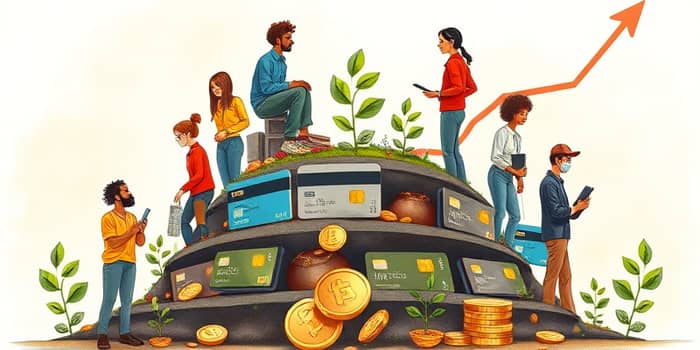
Credit cards can be both a powerful tool and a potential pitfall in modern personal finance. With U.S. credit card debt surging to over $1.277 trillion by Q4 2025, understanding how to manage balances wisely is more important than ever. This article charts the journey from past trends to present realities, offering clear steps to foster responsible borrowing and spending and ultimately build a resilient financial foundation.
Since tracking began in 1999, credit card balances have climbed steadily. The 2008 financial crisis caused a sharp spike in delinquencies, but the recovery that followed saw consumers gradually regain control. The pandemic years of 2020–2021 introduced unprecedented volatility: initial drops in spending were followed by rapid rebounds and a surge of new balances. As of Q4 2019, records were set again, only to be eclipsed by a further $507 billion increase by Q1 2021. These historical ebbs and flows underscore the need for adaptable strategies.
Today’s environment is shaped by persistent inflation and high interest rates, which squeeze household budgets and elevate borrowing costs. Americans now average $7,886 in credit card debt among those carrying unpaid balances, while the average household owes nearly $11,000. Yet moderation is emerging: projected balance growth for 2026 is a modest 2.3%, the smallest annual jump in over a decade. Stable delinquency rates near 2.57% signal that many borrowers and lenders are adopting more disciplined approaches.
Consumer habits reveal surprising persistence. Approximately 61% of credit card debt holders carry balances for over a year, and 46% of cardholders have carried a balance for at least one month in the past year. Although Americans hold an average of 7.1 cards, only 3.7 are actively used. This indicates that many people maintain lines of credit more for available access than for regular spending. Recognizing that holding unused cards can impact credit utilization and scores is crucial for strategic account management.
Delinquencies remain a concern: over 12% of credit card debt is 90+ days past due. Lenders forecast stability in severe delinquency rates, but consumers must watch for early warning signs of financial stress—rising minimum payments, skipped due dates, or reliance on cash advances. Building a buffer of savings, negotiating hardship programs, and adjusting budgets before arrears accumulate will protect credit scores and prevent long-term damage.
Encouraging trends suggest households are becoming more cautious. The projected 2.3% balance increase for 2026 contrasts with double-digit growth in prior years, marking the slowest balance growth since 2013. Tighter underwriting standards by lenders have curtailed overextension, while consumers are embracing measured spending and prudent lending practices. These dynamics foster a healthier credit marketplace and more sustainable personal finances.
Credit behaviors vary markedly by region and demographic. In Q3 2025, Connecticut led with the highest average card debt at $9,778, followed closely by New Jersey and Maryland. Conversely, Mississippi households carried just $4,887 on average. Some states, like Washington and South Dakota, saw debt grow by nearly 12%, while New Mexico achieved a 10.3% reduction. Understanding these local differences can guide tailored financial planning and community support initiatives.
Crafting a stable financial future involves both big-picture strategy and daily discipline. Begin by setting clear goals—whether paying off balances within a year or maintaining zero-credit utilization. Diversify repayment methods: prioritize high-interest cards, then snowball smaller balances. Continue building an emergency fund to cover unexpected expenses and avoid reliance on credit. Over time, these habits coalesce into a strong financial foundation that weathers economic storms and empowers your aspirations.
Remember, progress is built on consistent action. Use monthly check-ins to assess debt levels, adjust budgets, and celebrate milestones. Seek professional advice when necessary, and leverage technology—apps, alerts, and payment schedulers—to stay on track. Ultimately, your credit card habits reflect your relationship with money. By embracing responsibility and informed choices, you can transform debt from a burden into a stepping stone toward financial freedom.
References